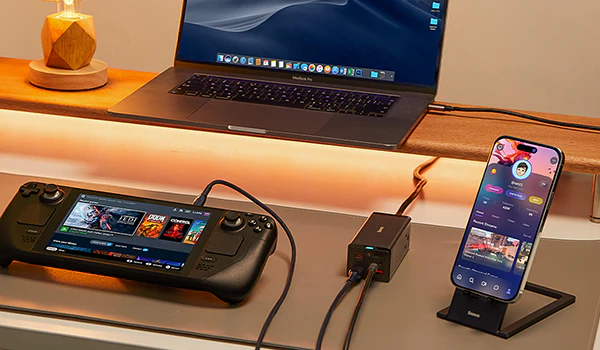
When you own a steam deck charger one thing becomes clear very quickly—the charger matters more than you think. Whether you’re gaming on the go, relaxing at home, or traveling with your console, the wrong charger can lead to slow charging, constant battery drain during gameplay, or even damage to your device. That’s why understanding the right Steam Deck charger is essential.
This guide breaks everything down in a casual, friendly tone—but with expert clarity—so you know exactly what charger to buy, how to use it correctly, and what to avoid like the plague.
What Makes the Steam Deck Charger Special? Understanding the Power Requirements
Before buying any charger, it’s important to understand what the steam deck charger actually needs. Unlike regular phones or tablets, the Steam Deck requires a specific set of charging standards to deliver full performance.
The Steam Deck’s Power Profile
The official Steam Deck charger outputs 45W USB-C PD (Power Delivery). This isn’t just any steam deck charger it’s designed to handle both charging AND powering the device during gameplay. The Deck can draw up to 45W, which means if your charger can’t deliver that, you’ll see slower charging or no charging at all while gaming.

Many users assume that any high-wattage charger will work, but the steam deck charger relies on USB-C PD with proper voltage steps, particularly the 15V and 20V profiles. Without those, the steam deck charger may reject the charger or limit power intake.
Why This Matters for Performance
A powerful handheld like the steam deck charger charging passively while you play. Games can drain the battery even when plugged in—especially with AAA titles. A weak charger may simply maintain the battery percentage instead of increasing it. Over time, this puts unnecessary heat and wear on the battery.
Using the right charger ensures: Stable charging during gameplay Reduced battery wear Fast charging when idle Better overall battery lifespan
Not All Chargers Are Made Equal
Even if the label says “65W,” “100W,” or “PD Charger,” it doesn’t mean it’s compatible. The charger must support at least 45W PD with 15V output. Many laptop chargers skip this. Some phone chargers offer high wattage but lack PD 3.0 compatibility.
The bottom line: The steam deck charger is picky for a reason—its power needs are different from everyday gadgets.
Official Steam Deck Charger vs. Third-Party Chargers: Which Is Best?
Gamers often debate whether the official charger is the best choice or if third-party brands can offer the same power at a better price. Let’s explore both options so you can make an informed decision.
The Official Steam Deck Charger
The charger that ships with the steam deck charger is a solid and dependable option. It’s built specifically for Valve’s hardware, comes with the right voltage profiles, and supports fast charging safely. For many users, this charger remains the gold standard.
The official charger offers:
45W USB-C PD Reliable thermal protection A durable cable Consistent charging speeds during gameplay
If you want a no-compromise, risk-free choice, the official charger is perfect. But it’s not always cheap, and buying extra units can get expensive quickly.
Third-Party Options: Are They Safe?
Third-party Steam Deck chargers can actually be great—if they follow the proper PD standards. Brands like Anker, UGREEN, Baseus, and Belkin produce PD chargers that meet or exceed the 45W requirement. These are often more compact, travel-friendly, and sometimes cheaper than the official version.
However, not all third-party chargers are made with the same level of quality. Some may claim 45W output but fail to sustain the voltage under load. Others skip safety protection, leading to overheating or unstable charging.
Choosing a good third-party charger requires checking:
USB PD 3.0 support At least 45W output 15V (3A) and 20V (2.25A) profiles Reputable brand reviews
As long as a charger meets these checks, it can perform just as well as—sometimes even better than—the official charger.
Which One Should You Choose?
Your choice depends on what you value most:
Official charger: reliability, guaranteed compatibility, optimized safety Third-party charger: versatility, pricing, compact size, multi-port options
If you’re buying a second charger for travel or for a different room, a good third-party option is perfectly fine.
Types of Steam Deck Chargers: Wall Adapters, Power Banks, and GaN Chargers
The Ssteam deck charger have to be tied to the wall. Depending on your lifestyle, you may prefer portable or fast-charging solutions. Here are the three main types that work best.
Traditional Wall Adapters
These are your standard PD chargers. They plug into the wall and deliver stable power. Wall adapters are still the most reliable way to charge the Steam Deck, especially during gameplay.
Wall adapters are perfect for:
Home setups Desk charging Gaming while plugged in
The only downside is portability—they’re not always the smallest or lightest option.
pwer Banks for steam deck charger
A power bank is a game-changer for travelers and commuters. But you need one that supports 45W PD output. Many power banks only support fast charging for phones, which won’t cut it.
A good Steam Deck-compatible power bank will have:
20,000mAh or more 45W or 65W USB-C PD output Pass-through charging (optional but useful)
This allows you to play on the go and extend your battery life without hunting for a wall outlet.
GaN Chargers: The New Standard
GaN (Gallium Nitride) chargers are the latest trend. They’re incredibly compact, efficient, and powerful.
Benefits include:
Smaller size Better heat management
Multi-device charging Higher wattage support
A 65W or 100W GaN charger with proper PD profiles can easily power the steam deck charger while also charging your phone or laptop simultaneously.
How to Choose the Right Steam Deck Charger: Expert Tips
With so many options available, you need a smart strategy to choose the right charger. Here’s what to consider when shopping.
Always Check the Voltage Profiles
The steam deck charger relies on 15V and 20V PD profiles. If the charger doesn’t list those, it’s not compatible—even if it says 65W.
These profiles are non-negotiable.
Don’t Ignore Cable Quality
A powerful charger is useless without a high-quality cable. USB-C cables vary widely in capability. Look for:
USB-C PD cables data rates (data isn’t as important as power rating Thick, durable insulation
Cheap cables overheat or fail to deliver stable power.
Avoid Super-Cheap No-Name Chargers
Bargain chargers might work initially, but they often:
Overheat Deliver unstable wattage Damage batteries over time
The steam deck charger is an expensive device—don’t risk it to save a few dollars.
Tip 4: Think About Your Use Case
If you travel, buy a GaN charger or power bank.
If you play mostly at home, get a reliable wall charger.
If you want flexibility, use a multi-port charger.
Picking the right type ensures you get the best experience without hassle.
Conclusion: The Right Steam Deck Charger Makes All the Difference
A steam deck charger charger may seem like a simple accessory, but it plays a crucial role in performance, battery longevity, and overall convenience. Whether you stick with the official charger or explore high-quality third-party options, understanding the device’s power requirements helps you avoid compatibility issues and ensures smooth charging anytime, anywhere.
In short:
A good charger keeps your steam deck charger powered.
A great charger keeps it performing.
Choose wisely, and your handheld gaming experience becomes better, safer, and much more enjoyable.
you may also read