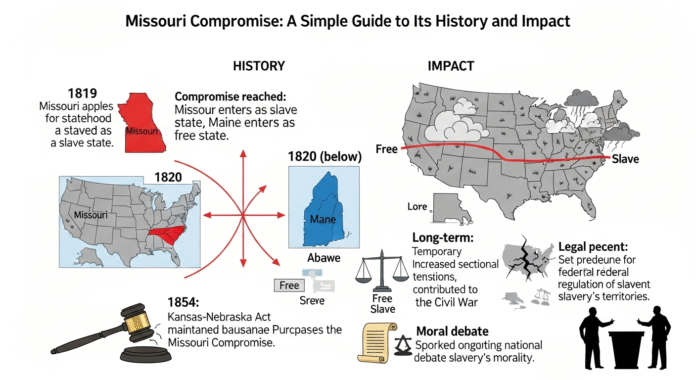
The Missouri Compromise is one of the most important events in U.S. history. Passed in 1820, it was a law that helped balance the number of slave and free states. Missouri became a slave state, while Maine joined as a free state. This compromise also set a line across the country that determined where slavery would be allowed in the future. It helped prevent early conflicts between the North and South, even though tensions over slavery would rise again later.
Missouri today is much more than its role in history. From Missouri football games to scenic trips along the Missouri River, this state has a lot to offer. Whether you’re visiting Branson, Missouri, or exploring Kansas City, Missouri, you’ll find a blend of history, culture, and natural beauty.
What Was the Missouri Compromise?
The Missouri Compromise was a law passed to keep the balance between free and slave states in the United States. At the time, Missouri wanted to join the Union as a slave state. To maintain fairness, Maine entered as a free state. The compromise also drew an imaginary line at latitude 36°30’. States north of this line could not allow slavery, except Missouri. This law helped delay conflicts over slavery for a few decades but didn’t solve the underlying problems.
Why Was Missouri Important?
Missouri’s location made it a key state in early America. The Missouri River was a major route for trade and transport. Its fertile land attracted farmers, and cities like Kansas City, Missouri became hubs for business and culture. Missouri’s role in history, especially through the Missouri Compromise, makes it a state worth studying. Today, Missouri is also known for Missouri basketball and its unique culture.
Missouri in Modern Times
Missouri has grown far beyond its historical significance. Visitors can enjoy Branson, Missouri, famous for live shows and entertainment. Sports fans cheer for Missouri football teams, and residents often play the Missouri lottery. Films like Three Billboards Outside Ebbing, Missouri have even shown the state on the big screen, highlighting its culture and landscapes.
Missouri River: Lifeline of the State
The Missouri River is the longest river in North America. It played a crucial role in early trade and migration. Farmers and traders relied on it to move goods and livestock. Today, it’s a favorite spot for fishing, boating, and sightseeing. The river also shaped the development of cities along its banks, including Kansas City, Missouri, a major economic hub.
Missouri Sports Highlights
Sports are a big part of Missouri’s culture. Missouri football games are popular, especially college rivalries. The state also shines in Missouri basketball, with passionate fans attending games across the state. Famous matches like Alabama vs Missouri draw large audiences and create unforgettable experiences for sports enthusiasts.
Famous Landmarks in Missouri
Missouri is home to many iconic landmarks. Branson, Missouri is a top destination for entertainment and family fun. Kansas City, Missouri is famous for jazz, barbecue, and historical sites. Other attractions include historic riverfronts along the Missouri River and scenic parks perfect for nature lovers.
Missouri in Popular Culture
Movies like Three Billboards Outside Ebbing, Missouri show the state’s unique charm. Missouri’s history, sports culture, and landmarks make it a popular choice for filmmakers and tourists alike. Even beyond cinema, the state’s traditions and culture remain a significant part of American life.
Missouri Lottery and Fun Facts
Missouri residents can enjoy the Missouri lottery, which funds public programs and entertainment. The state is known for friendly communities, rich history, and famous rivers. Missouri also celebrates unique events and sports traditions, making it fun for locals and tourists alike.
Economic and Cultural Importance
Missouri’s economy thrives on agriculture, industry, and tourism. Kansas City, Missouri is a central business hub, while the Missouri River supports trade and recreation. Cultural events in Branson, Missouri, and sports games, such as Missouri basketball, create a vibrant lifestyle that attracts visitors from all over the country.
Legacy of the Missouri Compromise
The Missouri Compromise left a lasting impact on U.S. history. It temporarily eased tensions over slavery and helped shape the nation’s future. Studying this law gives insight into early American politics and the challenges of balancing freedom and fairness. Missouri itself continues to grow and thrive, blending its historical importance with modern attractions and culture.
FAQs About the Missouri Compromise
Q1: What was the Missouri Compromise?
A: It was a law passed in 1820 to maintain a balance between free and slave states.
Q2: Why was Missouri so important?
A: Its location and resources made it key for trade, culture, and political influence.
Q3: What is the Missouri River known for?
A: It is the longest river in North America and vital for trade, farming, and tourism.
Q4: Can you visit Branson, Missouri today?
A: Yes, Branson is a top destination for live shows, family fun, and entertainment.
Q5: What are some Missouri sports highlights?
A: Missouri football, Missouri basketball, and big games like Alabama vs Missouri are very popular.
Q6: How did the Missouri Compromise affect slavery?
A: It temporarily limited where slavery could expand but didn’t end it entirely.
Conclusion
The Missouri Compromise is more than just a law in history books. It shaped America and made Missouri a key state in U.S. politics. Today, Missouri offers rich culture, sports, and entertainment. From exploring the Missouri River to cheering at Missouri football games, there’s something for everyone. Understanding history helps us appreciate the present, and Missouri is a perfect place to see that connection in action.