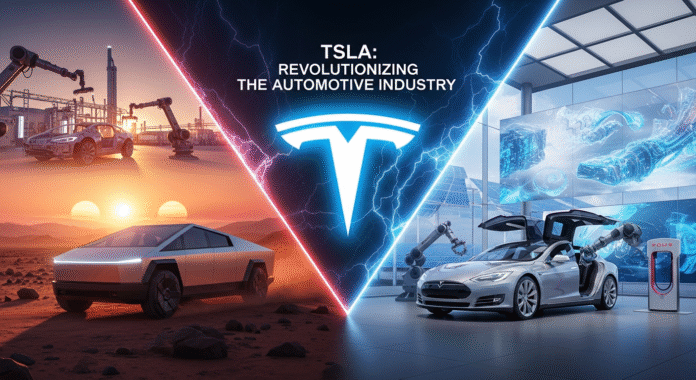
Tesla, Inc., commonly referred to by its stock ticker TSLA, has emerged as one of the most transformative companies in the global automotive and energy sectors. Founded in 2003 by Martin Eberhard and Marc Tarpenning, and later led by Elon Musk, Tesla’s mission is to accelerate the world’s transition to sustainable energy. Over the years, TSLA has evolved from a niche electric vehicle (EV) manufacturer into a global leader, influencing not only automotive technology but also renewable energy adoption and market sentiment.
The Rise of Tesla
Tesla’s journey began with the introduction of the Roadster in 2008, a sleek electric sports car that demonstrated EVs could rival traditional gasoline vehicles in performance. The Roadster served as a proof of concept and helped establish Tesla as a credible competitor in the automotive market. With the launch of the Model S in 2012, Tesla took a significant leap forward, offering a luxury electric sedan with long-range capabilities, cutting-edge technology, and autopilot features that positioned it as a leader in EV innovation.
The company continued its expansion with the Model X SUV, Model 3 sedan, and Model Y crossover. Each model was strategically designed to appeal to different market segments, allowing TSLA to broaden its consumer base while maintaining a reputation for high-quality, technologically advanced vehicles.
Tesla’s Technological Innovations
Tesla’s success is rooted in its relentless focus on innovation. The company is not just an automaker; it is a technology company with a strong emphasis on software, battery technology, and autonomous driving systems. Its proprietary battery technology, including the development of high-energy-density lithium-ion cells and the more recent 4680 cells, has enabled longer vehicle ranges and lower costs over time.
The Autopilot system is another area where Tesla has distinguished itself. While not fully autonomous yet, Tesla’s advanced driver-assistance system combines hardware and software to provide semi-autonomous driving capabilities. Over-the-air software updates allow Tesla vehicles to continually improve their functionality, a feature rarely seen in traditional automakers.
Tesla’s Market Influence
TSLA is a market darling, often making headlines for its stock performance. Tesla’s market capitalization has at times made it the most valuable automaker in the world, despite producing fewer vehicles than traditional giants like Toyota or Volkswagen. Investors are drawn to Tesla’s potential to dominate the EV market, its innovative approach to technology, and its vision of a sustainable future.
Tesla’s influence extends beyond stock performance. The company has pressured traditional automakers to accelerate their own electric vehicle programs. Companies like Ford, General Motors, and Volkswagen have committed billions to electrification in response to Tesla’s market leadership. TSLA has effectively reshaped the global automotive landscape, pushing the entire industry toward sustainability.
Energy Solutions and Solar Initiatives
Tesla is not limited to vehicles. Its energy division, Tesla Energy, focuses on renewable energy solutions and energy storage products. The Powerwall, Powerpack, and Megapack are battery storage systems designed for homes, businesses, and utility-scale projects. These products enable efficient energy management, storing solar power for later use and helping stabilize electricity grids.
Tesla’s acquisition of SolarCity in 2016 marked its entry into the solar energy market. Tesla Solar Roof tiles integrate seamlessly with home designs while generating clean energy. This combination of electric vehicles and renewable energy solutions embodies Tesla’s holistic approach to sustainable living, positioning TSLA as more than just an automaker.
Global Expansion and Manufacturing
Tesla’s growth strategy relies heavily on global expansion. Gigafactories, large-scale manufacturing facilities, are central to this approach. These factories allow Tesla to produce vehicles, batteries, and energy products efficiently while reducing production costs. Key Gigafactories include:
Tesla Gigafactory Nevada
Tesla Gigafactory Shanghai
Tesla Gigafactory Berlin
Tesla Gigafactory Texas
Each facility is strategically located to serve regional markets and reduce logistical challenges. Tesla’s global presence not only increases production capacity but also strengthens brand recognition and influence worldwide.
Challenges and Criticisms
Despite its success, TSLA faces challenges and criticisms. Production delays, quality control issues, and regulatory scrutiny have occasionally affected the company’s reputation. Autopilot safety concerns and reports of vehicle accidents have prompted investigations and highlighted the need for caution in autonomous driving technology.
Tesla’s valuation is another point of debate among analysts. While many investors see TSLA as a growth stock with long-term potential, others argue that its market capitalization is disproportionately high compared to traditional automakers. Such discrepancies make TSLA a frequent topic of discussion in financial circles.
The Future of TSLA
Tesla’s future appears promising, with multiple growth avenues. Expansion into emerging markets, continued innovation in battery technology, and advancements in autonomous driving are key drivers. TSLA’s focus on AI, energy solutions, and vehicle software also suggests that the company could extend beyond automotive markets, influencing sectors such as robotics, logistics, and smart cities.
The anticipated Cybertruck, Semi truck, and new Roadster generation highlight Tesla’s commitment to innovation and diversification. As governments worldwide push for carbon neutrality and emission reductions, Tesla is well-positioned to benefit from supportive policies and growing EV adoption.
TSLA’s Cultural and Social Impact
Tesla has achieved more than technological breakthroughs; it has influenced societal attitudes toward electric vehicles and sustainability. Tesla owners often embrace the company’s mission, contributing to a strong community and brand loyalty. Social media presence, online forums, and Tesla fan events have helped cultivate a dedicated following, further solidifying TSLA’s status as a cultural phenomenon.
Elon Musk’s leadership style, public statements, and social media activity have also shaped public perception. While controversial at times, Musk’s visibility and vision contribute significantly to TSLA’s brand identity and market intrigue.
Investment Considerations
Investing in TSLA requires careful consideration. Factors to evaluate include production capacity, technological innovation, regulatory developments, competition from legacy automakers, and global economic trends. Investors must balance the potential for high returns against the risks associated with market volatility and evolving technology standards.
TSLA’s stock performance is influenced by both company-specific developments and broader market dynamics. Analysts often monitor quarterly deliveries, earnings reports, and announcements related to new products or factory expansions. For long-term investors, Tesla represents both an opportunity to participate in the EV revolution and a test of patience in navigating market fluctuations.
Conclusion
TSLA is more than a stock or an automaker; it represents a vision of the future where sustainable energy and advanced technology coexist. Tesla has redefined the possibilities for electric vehicles, renewable energy, and integrated technology solutions, inspiring a shift in consumer behavior, corporate strategy, and global markets. With ongoing innovation, strategic global expansion, and a strong cultural impact, Tesla continues to shape the trajectory of the automotive industry and beyond.
As TSLA moves forward, its influence on technology, sustainability, and market dynamics will likely remain significant. For investors, enthusiasts, and industry watchers, Tesla offers a compelling example of how bold vision, technological innovation, and strategic execution can transform an industry while driving meaningful change.